
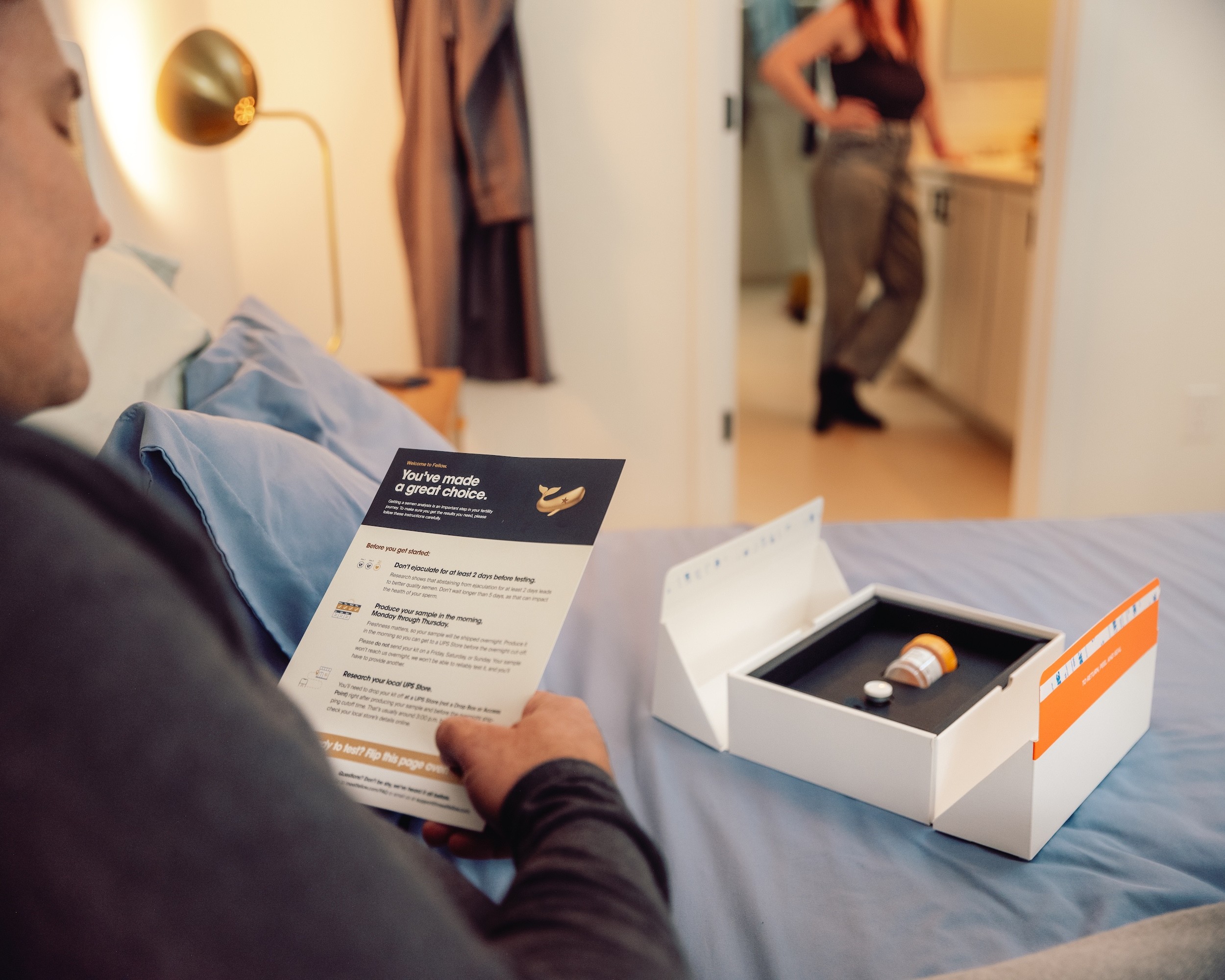
Mail-in vs. At-Home: What's the difference?
Both let you produce a semen sample at home so you can skip the awkward lab visit. The results you get, and what they can be used for, vary.
Fellow Mail-in
Validated to produce clinically accurate results on par with in-lab analysis
At-home
Provides "wellness-grade" results that can help establish a baseline
Who should choose mail-in instead of at-home?
Couples actively trying to conceive or considering fertility treatment
People who want results a doctor can act on
Those who value expert review and validated testing over quick wellness scores

Semen analysis results explained
What can you learn from diagnostic-grade mail-in testing?
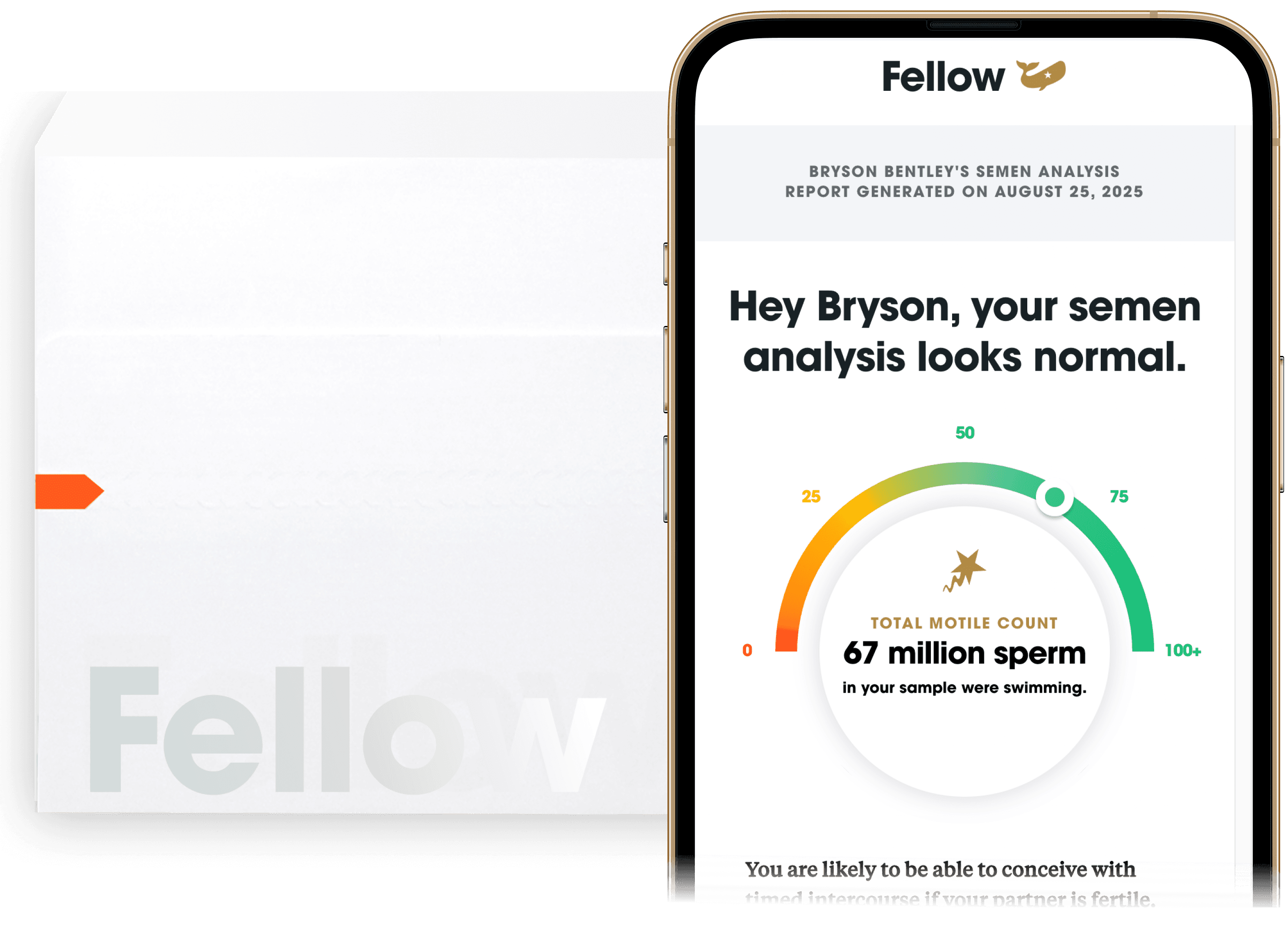
Total Motile Count
How many sperm are swimming, total?
This is regarded as the most important factor for male fertility. It is the result of multiplying sample volume, concentration, and motility.
Volume
How many mL of semen are there?
Volume refers to the amount of semen in your sample (measured in mL). This can fluctuate quite a bit.
Concentration
How many sperm are in each mL?
Sperm concentration is the number of sperm per mL in a semen sample.
Count
How many total sperm are there?
Sperm count is the total number of sperm in the entire sample. To determine the sperm count, sperm concentration is multiplied by the total volume of the sample.
Motility
How well are the sperm swimming?
Sperm motility refers to the percentage of sperm that are swimming in a sample. This is important for fertility because sperm need to swim to reach and fertilize an egg.
Morphology
Does the shape of your sperm impact fertility?
Sperm morphology refers to the shape of sperm. Usually, only 4%-20% of sperm cells are normally shaped, and many shapes of sperm can result in a pregnancy. We may not be able to return morphology results for samples with low sperm counts or low motility.